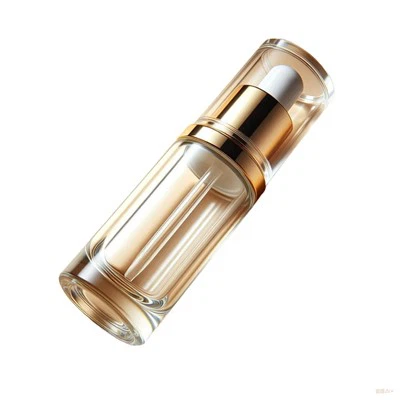
Dual Chamber Airless Bottle – 15ml*2
Key Features
- Dual chamber design with single pump head
- Vacuum mechanism for airless preservation
- Simultaneous and separate dispensing of two materials
Compliance
- EU 1935/2004 | U.S. FDA standards
- Certificates: CE, SGS, RoHS, MSDS, SVHC
Customization
- Color | Size | Packaging
- Printing: screen, offset, hot silver, hot stamping, electroplating, UV, embossing, spraying
- Packaging: labels, paper boxes, gift boxes, paper tubes, paper bags, PVC boxes
Product Parameters
|
Item |
Specification |
|
Product name |
Dual Chamber Airless Bottle |
|
Structure |
Side-by-side twin chamber, single actuator, shared orifice |
|
Total capacity |
30 ml (15 ml + 15 ml) |
|
Dispensing ratio |
1:1, tolerance ±3% |
|
Other ratios |
2:1 and 1:2 from stock tooling; 3:1, 1:3 and custom ratios on new piston tooling |
|
Other volumes |
10+10, 20+20, 15+30, 30+30 ml |
|
Body material |
PP outer, PP inner chambers, EVOH barrier optional |
|
Piston material |
PP (PE on request for high alcohol, barrier-coated for low residual) |
|
Pump spring |
304 SS standard; 316 SS or POM for pH under 3 or chloride-containing formulas |
|
Actuator material |
PP, electroplating or metallised finish optional |
|
Output per stroke |
0.50 ± 0.05 ml total (0.25 ml per chamber) |
|
Priming |
5-8 presses |
|
Residual after full evacuation |
3-5% per chamber (around 2% with barrier-coated piston) |
|
Viscosity range |
1,000-30,000 mPa·s per chamber |
|
Neck / collar |
30 mm collar, snap-on or screw, torque 8-12 in-lb (PP) / 10-15 in-lb (metal) |
|
Fill level |
90-95% of nominal per chamber, equal on both |
|
Filling temperature |
20-25 °C |
|
Max particle size |
100 µm |
|
Dimensions |
38 mm diameter x 118 mm height (30 ml version) |
|
Carton |
480 pcs per carton, 52 x 38 x 32 cm, approx. 9.5 kg |
|
MOQ |
5,000 pcs stock / 10,000 pcs printed / 20,000 pcs new ratio or chamber tooling |
|
Sample |
Stock sample free, custom sample charged and credited against the first order |
|
Sample lead time |
7-10 days |
|
Mass production lead time |
30-40 days; 40-50 days on the first order with new tooling |
Chamber Volumes and Dispensing Ratios
Stock chamber combinations:
|
Total volume |
Configuration |
Ratio |
Typical product |
|
20 ml |
10 ml + 10 ml |
1:1 |
Eye duo, travel size, two-step ampoule |
|
30 ml |
15 ml + 15 ml |
1:1 |
Serum + activator, the most common combination |
|
40 ml |
20 ml + 20 ml |
1:1 |
Lotion duo, day + night |
|
45 ml |
15 ml + 30 ml |
1:2 |
Hair colour: one part colour, two parts developer |
|
60 ml |
30 ml + 30 ml |
1:1 |
Body treatment, hair mask duo |
Ratios we can build, and what each one costs you in tooling:
|
Ratio |
Available from stock tooling |
Needs new piston tooling |
Typical use |
|
1:1 |
Yes |
No |
Vitamin C + hyaluronic acid, retinol + peptide, day + night |
|
2:1 |
Yes |
No |
Developer-heavy hair colour, base + booster |
|
1:2 |
Yes |
No |
Concentrated serum + dilution base |
|
3:1 |
No |
Yes |
Strong active + carrier |
|
1:3 |
No |
Yes |
Concentrate + large diluent |
|
Any custom ratio |
No |
Yes |
Quoted against drawings |
Ratio tolerance: ±3% on 1:1, ±5% on asymmetric ratios, measured over ten consecutive doses after priming.
Professional OEM Service
|
Process |
What it does |
Limit on a dual chamber bottle |
MOQ |
Added cost |
|
Silk screen printing |
1-4 colours, Pantone matched |
Print area is split by the chamber seam; a logo crossing the seam needs two print stations |
10,000 pcs |
Base |
|
Hot stamping |
Gold / silver / pigment foil |
Foil will not hold on a curved seam; keep artwork off the seam line |
10,000 pcs |
+15-20% |
|
Electroplating |
Vacuum metallised chrome / gold on the actuator and collar |
Do not plate the bottle body - the chamber walls flex and the plating cracks |
10,000 pcs |
+30-50% |
|
Spray coating |
Matte, pearl, gradient, soft-touch |
Adds 5-7 days; soft-touch marks easily in transit |
10,000 pcs |
+20-30% |
|
UV printing |
Full colour, photographic |
Fine on the flat face, registration drifts around the curve |
10,000 pcs |
+15-25% |
|
Laser engraving |
On the actuator only |
No ink, no coating - the only decoration that does not affect a compliance declaration |
5,000 pcs |
+10-15% |
|
Label |
Paper, PP, metallised |
Must be registered to the A/B orientation |
5,000 pcs |
Base |

Output per Stroke and How Many Doses You Get
|
Configuration |
Total output per stroke |
Output A |
Output B |
Usable volume at 90% fill |
Full strokes |
Saleable doses after priming |
|
10 + 10 ml |
0.40 ± 0.04 ml |
0.20 ml |
0.20 ml |
18 ml |
45 |
37 |
|
15 + 15 ml |
0.50 ± 0.05 ml |
0.25 ml |
0.25 ml |
27 ml |
54 |
46 |
|
20 + 20 ml |
0.60 ± 0.06 ml |
0.30 ml |
0.30 ml |
36 ml |
60 |
52 |
|
15 + 30 ml (1:2) |
0.60 ± 0.06 ml |
0.20 ml |
0.40 ml |
40.5 ml |
67 |
59 |
|
30 + 30 ml |
0.80 ± 0.08 ml |
0.40 ml |
0.40 ml |
54 ml |
67 |
59 |
Quality Control and Acceptance
AQL: critical 0 / major 2.5 / minor 4.0.
|
Test |
Method |
Pass criteria |
Frequency |
|
Dispensing ratio |
Fill A with dyed water, B with mineral oil; dispense 10 doses into a graduated cylinder; the two phases separate, read each volume |
Within ±3% on 1:1, ±5% asymmetric |
Every production lot |
|
Output per stroke |
Weigh 10 consecutive doses |
0.50 ± 0.05 ml, deviation under 10% |
Every lot |
|
Cross-chamber seal |
Fill A with dyed water, B clear; store 4 weeks at 40 °C |
No colour transfer into B |
Every new tool, then quarterly |
|
Pressure differential |
Hold 0.2 bar between chambers for 60 s |
No transfer, no leak |
Every new tool |
|
Airless vacuum hold |
-0.3 bar for 30 s |
No pressure loss |
5 pcs per lot |
|
Piston travel force |
Force gauge on full stroke |
Under 15 N, no stick-slip |
10 pcs per lot |
|
Residual |
Weigh bottle before and after full evacuation |
Under 5% per chamber |
5 pcs per lot |
|
Drop test |
1.2 m, six faces, filled bottle |
No crack, no actuator separation, ratio still in spec |
Every new tool |
|
Torque retention |
Torque gauge after 24 h |
Within 20% of applied torque |
5 pcs per lot |
|
Decoration adhesion |
Cross-hatch 4B minimum; 500 g alcohol rub, 50 cycles |
No removal |
Every lot |
Qualification Certificate

Trade Terms
|
Item |
Terms |
|
MOQ |
5,000 pcs stock / 10,000 pcs printed / 20,000 pcs new ratio or chamber tooling |
|
Sample |
Stock sample free; custom sample charged at cost and credited against your first order |
|
Sample lead time |
7-10 days |
|
Mass production |
30-40 days |
|
First order with new tooling |
40-50 days |
|
Tooling |
New chamber tool quoted against drawings; tooling is yours and stays with us for your repeat orders |
|
Price terms |
EXW, FOB Shanghai, or CIF to your port |
|
Payment |
30% deposit with the order, 70% against copy of B/L; L/C at sight for orders above USD 30,000 |
|
Packing |
Individual PP bag, egg-crate dividers, export carton; palletised on request |
|
Warranty |
Any defect outside AQL 2.5 replaced on the next shipment or credited - photograph within 7 days of receipt |
Two Chambers, One Pump: How the Ratio Is Set
Four structures exist. Pick the one that matches what your two formulas actually do to each other:
|
Structure |
How it works |
When to use |
Tooling cost |
|
Side-by-side twin chamber, one actuator, shared orifice |
Two pistons rise together, both phases meet at the tip |
Two phases are stable when mixed, most serums and duos |
Lowest, this is the stock tool |
|
Concentric (inner chamber + outer annulus) |
One chamber sits inside the other, ratio set by annular area |
Uneven ratios like 1:2 or 1:3 where side-by-side looks lopsided |
Higher |
|
Twin pump, twin orifice, no mixing |
Two separate pump engines, two nozzles, phases never touch |
Products that must only meet on the skin |
Higher, two engines |
|
Chamber with a twist-lock separator |
One chamber sealed by a membrane until the consumer twists |
Fresh-mix: powder + liquid, or an unstable active |
Highest |

FAQ
Q: Can we change the ratio after the tool is made?
A: No. The ratio is the ratio of the two piston bore areas. It is cut into the tool and it does not change. 1:1 and 2:1 are stock tools; anything else is a new piston set. Tell us your target ratio at enquiry stage, not after sampling.
Q: Can the two chambers hold formulas with different viscosities?
A: Yes, but keep them within 30% of each other. Both pistons travel the same distance, so the thicker side draws slightly less per stroke. Past a 100% difference the delivered ratio can drift 20% off nominal. Give us both viscosities and we compensate in the bore sizing - but only before the tool is cut.
Q: Will the two formulas mix inside the nozzle and block it?
A: If your two phases react, yes, eventually. Between strokes a small amount of mixed product sits in the orifice. Two-part colour developers, enzyme and activator pairs, and acid-plus-neutraliser systems all cure there. The fix is a static mixing tip plus a pot-life test on the mixed product. We flag this at enquiry stage because it changes the nozzle and the price.
Q: What ratios and volumes can I get without paying for tooling?
A: Ratios 1:1, 2:1 and 1:2. Volumes 10+10, 15+15, 20+20, 15+30 and 30+30 ml. Anything outside that list is new tooling at 20,000 pcs MOQ.
Q: How much product is left in the bottle when it is empty?
A: 3-5% per chamber. On a 15 + 15 that is about 1.2 to 1.5 ml you will not get out. A barrier-coated piston brings it down to roughly 2%, and it is worth it above a certain formula cost - we will run the numbers with you.
Q: Is airless the same as an oxygen barrier?
A:No, and this is the most common misunderstanding. Airless removes headspace oxygen and stops air being pumped back in, which is why retinol and vitamin C last longer in it. Oxygen still permeates through a standard PP wall over months. If your active is genuinely oxygen-sensitive, ask for the EVOH barrier layer - it is an option, not a default.
Q: What certificates do you actually supply?
A: (EC) 1935/2004 and EU 10/2011 declarations, FDA 21 CFR resin statement, REACH SVHC statement, heavy metals to EU 94/62/EC, California Prop 65, and SGS or Intertek test reports arranged on request. We do not issue CE or RoHS for cosmetic packaging, because neither applies.
Q: Can our existing airless filling line fill this?
A: Only if it has two nozzles, or a head that indexes between the two chamber openings. A single-nozzle airless line cannot. Also check that your filler can hit the same percentage fill in both chambers - unequal fill means one chamber runs dry first and the rest of the strokes deliver air.
Q: What is the MOQ and lead time?
A: 5,000 pcs for stock bottles, 10,000 pcs printed, 20,000 pcs for a new ratio or chamber tool. Samples in 7-10 days. Mass production 30-40 days, or 40-50 days on a first order with new tooling.
Q: Can the consumer refill it?
A: No, not this one. The pistons ride up on vacuum and cannot be reset by hand. Forcing them back down traps air, and once air is in the chamber it is no longer airless. If refillable is a requirement, ask about the replaceable inner cartridge version - it is a different product and a different price.
Hot Tags: 15ml Dual Chamber Airless Dispensing Bottle, China 15ml Dual Chamber Airless Dispensing Bottle manufacturers, suppliers, factory, Glass Airless Pump Bottles, Glass Airless Bottles, airless containers cosmetics, Cosmetic Dropper Bottles, empty cosmetic bottle, Frosted Glass Cosmetic Bottles